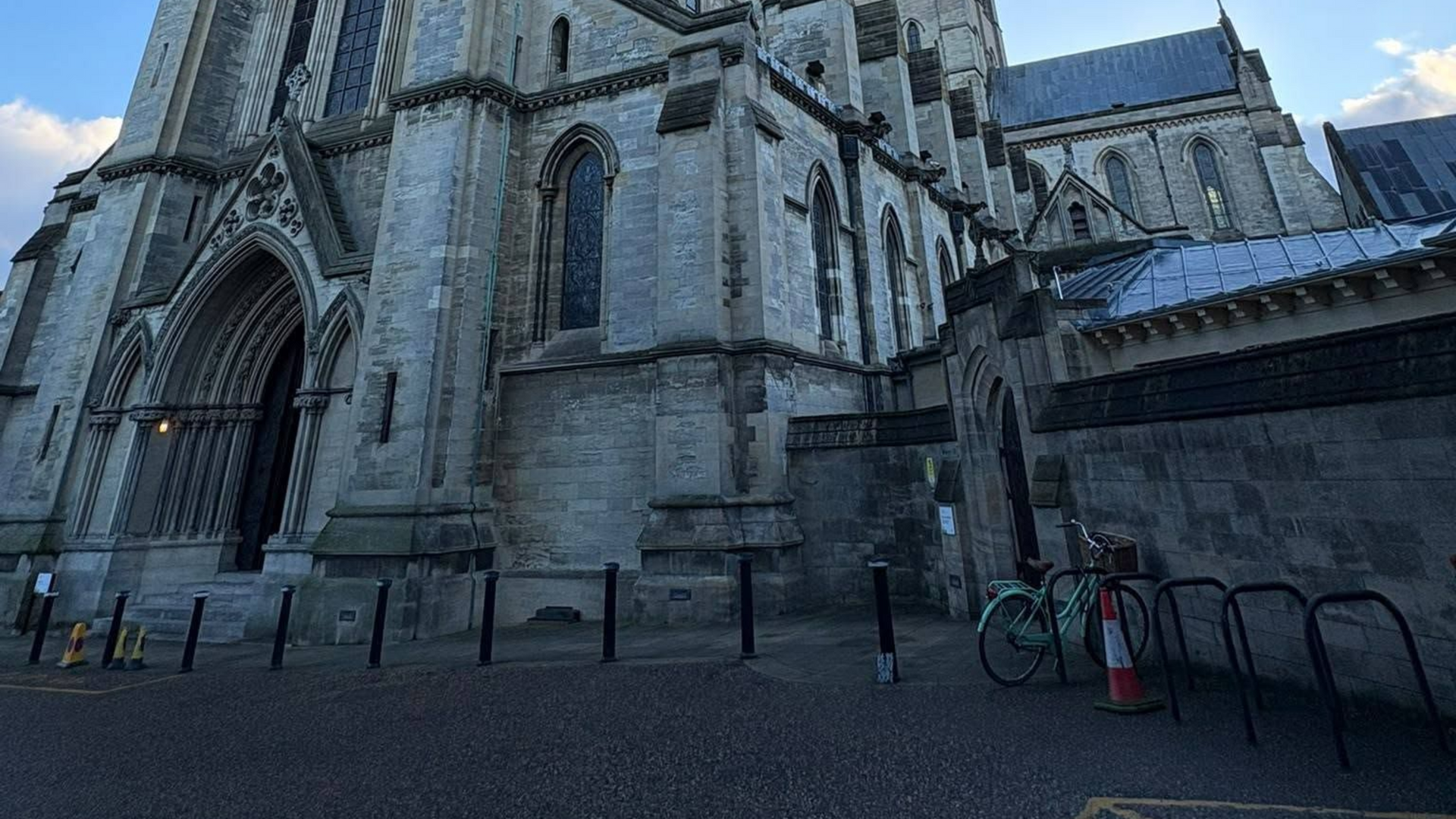
Nestled along Boniface Walk in Harrow stands a true hidden gem the St. Thérèse of the Child Jesus Catholic Church. On a beautiful spring day, 25 April 2026 (the Feast of St Mark), the parish was graced by a very special visit: the National Pilgrim Virgin Statue of Our Lady of Fatima , accompanied by the relics of Saint Francisco Marto and Saint Jacinta Marto. The parish community, led by Fr Antonio Pineda, gave Our Lady a heartfelt welcome. The celebration began with a joyful procession, bringing together parishioners and visitors. The statue, beautifully adorned with vibrant flowers, was carried into the church by Confirmation candidates. She was then crowned and honoured with incense, together with the relics of the Fatima saints. It was truly a grace-filled day. Visitors came from near and far, including the parish of Our Lady of the Holy Souls Church. Many stayed to take part in the full programme, which included: The praying of the Holy Rosary, Divine Mercy Chaplet and the Chaplet of Adoration and Reparation; A recorded talk by Sister Angela Coelho on the lives of the Fatima saints; Enrolment and investiture of the Brown Scapular; Veneration of the sacred relics; The visit concluded on 26 April during the 10:00 AM Mass. A beautiful moment of reconsecration to the Immaculate Heart of Mary took place, alongside the launch of the Home Pilgrim Virgin Statue Visitation Programme (HPVS) . The first family was blessed to receive the statue and welcome Our Lady into their home. With the launch of HPVS, the parish looks forward to deepening devotion through the First Saturday Devotion and other initiatives of the World Apostolate of Fatima England and Wales. In doing so, they can fully embrace the message of Our Lady of Fatima. Ave Maria!

2026 Visitations - Parish of Our Lady Queen of Peace in Adur Valley, Diocese of Arundel and Brighton
Ave Maria! The 2026 visitations have begun. First stop was the Parish of Our Lady Queen of Peace in Adur Valley, Diocese of Arundel and Brighton. It was held on 7-8 March 2026. Rev Fr Graham Ricketts, the PP, received, crowned, and blessed the NPVS of Our Lady of Fàtima, the Relics of Saints Francisco and Jacinta Marto, and the Centenary Icon of the First Saturdays Devotion. The day's event was attended by at least 100 of the faithful from the parish as well as the neighbouring ones. There were also two other priests from the Diocese who attended the special day. One of the highlights of the event was the Showcase of Programmes offered by WAF E&W: the Fàtima Prayer Cell programme, the Home Pilgrim Virgin Statue Visitation programme, and the Promoters and Children of the Eucharist/Young Missionaries of Mary programme. The faithful did learn on the practicalities of learning, living and spreading the message of Fàtima through the different presentations and Q&A. Being the first Saturday of March, the requirements of this much needed devotion were provided and fulfilled: Sacrament of Reconciliation or Confession; Receiving Holy Communion during the Mass; Recitation of the 5 decades of Joyful Mysteries; 15 minutes meditation on a mystery of the Rosary by Fr Graham. All of these were done with the intention of making Reparation to the Immaculate Heart of Mary. All who attended signified that the day was like their retreat during this season of Lent. Special thank you to all who came and praying that they will now live and spread the message of Peace and Personal Salvation ๐ St Peter, pray for us. St Francisco, pray for us. St Jacinta, pray for us. Our Lady of the Rosary, pray for us. Our Lady of Fàtima, pray for us. Our Lady Queen of Peace, pray for us.

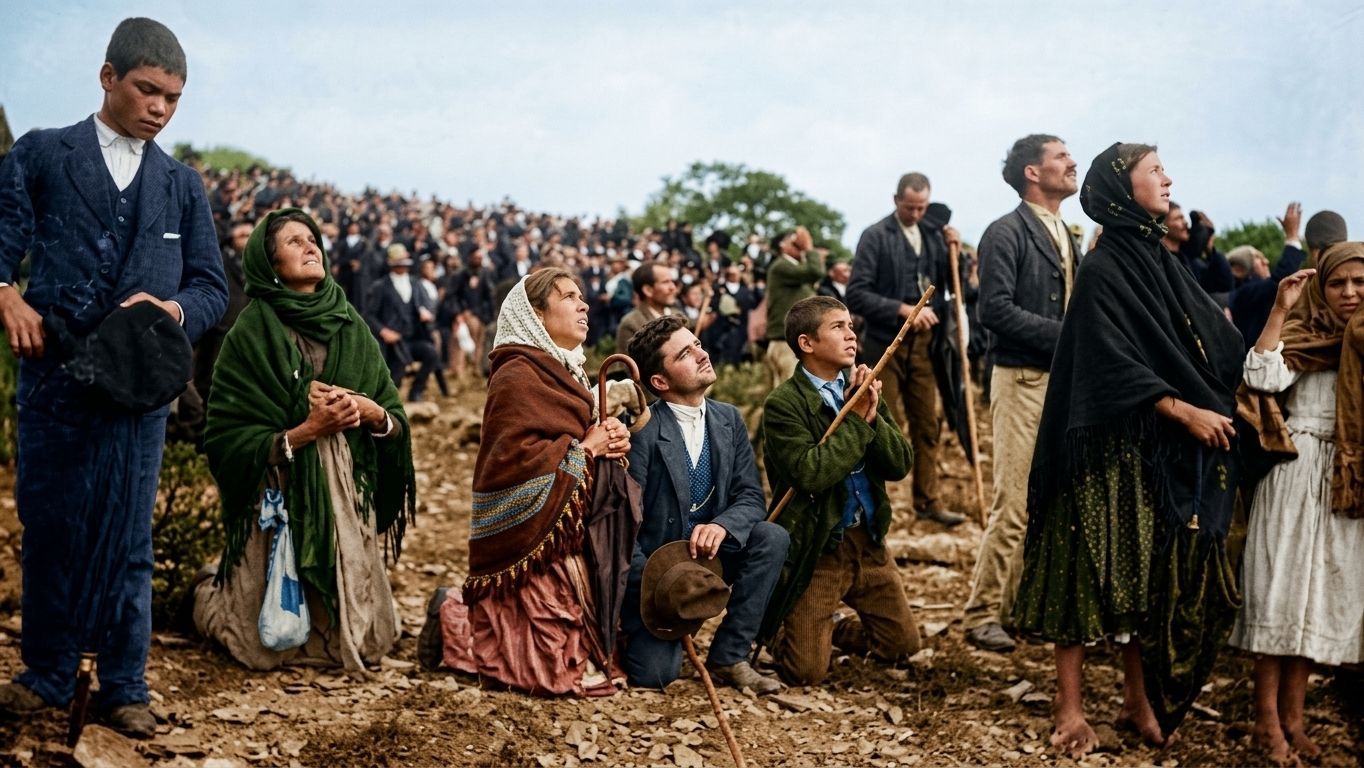
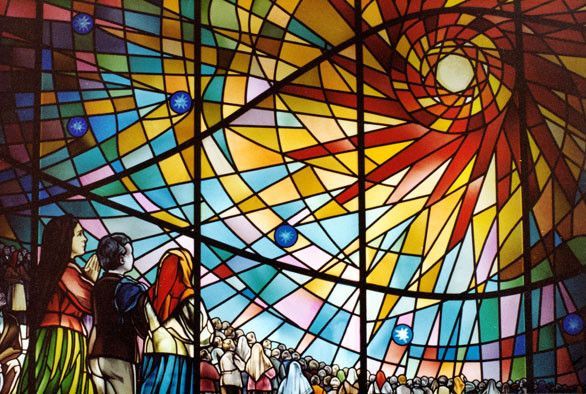
The first apparitions at Fatima unfolded in the radiant joy of the Easter season. They echo beautifully and profoundly the three great solemnities that crown this sacred time: Ascension, Pentecost, and Trinity. Each reveals a facet of God’s saving love, and each resonates with the message entrusted to the shepherd children. Ascension lifts our hearts to God through prayer, sacrifice, and hope. Pentecost pours out the Holy Spirit, whom Our Lady invites us to welcome through the daily Rosary. The Holy Trinity draws us into the very mystery of divine love. Ascension, Pentecost, and Trinity form a single movement of God’s gift to humanity. Each Solemnity reveals, in its own way, the fullness of God’s plan: to raise us, heal us, and invite us into his own life. Ascension: Christ Exalted, Humanity Raised Christ’s Ascension is not His departure but His exaltation of human nature itself. In the Summa Theologiae , St Thomas Aquinas writes that Christ ascended “to prepare the way for us,” lifting our humanity into the very presence of God. The Ascension is therefore not absence but promise: Where Christ has gone, we are called to follow and it accomplishes three main things: • It increases our faith , because we now believe without seeing. • It strengthens our hope , because Christ has opened heaven to humanity. • It directs our charity , because our hearts are drawn upward to God. This upward movement of the soul echoes the message of Fatima. When the Angel of Peace appeared to the children in 1916, he taught them to adore God with profound humility, an act that lifts the heart toward heaven. The Ascension reminds us that Christian life is always oriented toward God, and the Rosary is that ladder of contemplation that draws us upward, mystery by mystery. Pentecost: The Spirit Who Perfects If the Ascension lifts humanity to God, Pentecost brings God’s own life into humanity. St Thomas Aquinas, "Pentecost is that moment when the Holy Spirit is given to the Church 'as the soul is given to the body'." The Spirit animates, unifies, and sanctifies. The Acts of the Apostles tells us that Mary was present in the Upper Room, a detail, profoundly significant. Mary, who had once conceived Christ through the overshadowing of the Holy Spirit, now stands among the disciples as the Spirit descends again, this time to overshadow the disciples and be revealed and vivified publicly at Pentecost. Thus, Pentecost becomes, in a sense, a new Annunciation: The Spirit comes upon Mary and the disciples, so that Christ may be made present in the world through their witness. There is also the theological explanation when we talk of the birth of the Church. The Church is born from the pierced side of Christ on the Cross, where blood and water flow forth (Jn 19:34). The Fathers, especially St Augustine sees this as the Sacramental origin of the Church: The blood signifying the Eucharist and the water signifying Baptism. From the new Adam’s side, the new Eve, the Church is brought to life. Pentecost is the public manifestation and empowerment of the Church, when the Holy Spirit descends upon the Apostles and sends them forth in mission. What was conceived sacramentally on Calvary, at Pentecost is revealed and vivified publicly. Pentecost also resonates deeply with Fatima. When Our Lady first appeared on 13 May 1917, she asked the children to pray the Rosary daily “to obtain peace for the world.” Peace is one of the fruits of the Holy Spirit and the restoration of relationship between God and men, ending the separation caused by sin. The Rosary is a school of the Spirit, forming hearts to be capable of receiving and spreading divine peace. Each ‘Hail Mary is an invitation for the Spirit to overshadow us, forming Christ within us, just as He formed Christ in Mary. Pentecost is not a historical event, but a living reality. Pentecost and Fatima together remind us that renewal begins with the Spirit poured into receptive hearts. In this way, the Holy Spirit: • Perfects our understanding , enabling us to grasp divine truth. • Strengthens our will , empowering us to live virtuously through its various fruits. • Unites the Church , making many members one Body in Christ. Trinity Sunday: The Mystery of Love Itself Trinity Sunday crowns the Easter season as this mystery is not abstract; it is relational, explains St Thomas. The Father sends the Son, the Son reveals the Father, and the Spirit unites us to both. Everything God does in the creation, redemption and sanctification, flows from this inner life of His love for us. Few modern witnesses illuminate the mystery of the Trinity as profoundly as Venerable Sister Lucia of Fatima, whose encounters with heaven in her vision of the Trinity, continue to guide the faithful today. Sister Lucia recounted the first apparition of Our Lady at Fatima on 13 May 1917 as a light “clearer than crystal” and “more brilliant than the sun”. This first early experience prepared Sister Lucia for what would become one of the most significant mystical graces of her life: the vision of the Most Holy Trinity at Tuy, Spain in 1929.

Whenever Our Lady has appeared on earth, whether at Fatima, in Lourdes, or to our holy father St Dominic in 1208, she has told us to pray the Holy Rosary. On the 13th May 1917, Our Lady appeared on a small Holm Oak tree to three little shepherds in the Cova da Iria in Fatima. She asked the children to pray the Rosary every day, in order to obtain peace for the world, and the end of war. As such, the Holy Rosary must not remain an ornament, or a sentimental gift, or a pretty necklace that hangs by our bed. It must be taken in our hands, just as Our Lady does. Mary leads us, and asks us all of us to pray the Rosary every day, just as she asked the little children. When Lucia, the older of the three shepherd children, asks if Francisco will also go to heaven, our Lady replies “He will go there too, but he must say many Rosaries.” In October 1917, Our Lady says: “I am the Lady of the Rosary. Continue to pray the Rosary every day.” So many times, Our Lady gives us this instruction in her various apparitions throughout the world. Why pray the Rosary, because Our Blessed Mother knows what is best for every single one of us, and as every mother, she wants the best for her children. Mother Mary told us to pray the rosary every day. The Rosary is not a set of beads, not just a set of Biblical meditations, but above all, a means of prayer. It has to be prayed, which means that it connects us to God, who is the object of our prayers. Mary guided Sr Lucia and conversed with her. Mary is conversing with us too and guiding us to Jesus whenever we pray the Rosary. In 1208, St Dominic had the privilege of being the first person to receive the prayers of the Rosary from Mary. He learned how to pray the Rosary, and thus how to ponder the mysteries of Christ’s incarnation, his life, his saving work. Our Lady came to St Dominic in a dream, and she told him that the Rosary is the “weapon, the Holy Trinity wants to use to reform the world”. In other words, God wills that the renewal of the world, the turning away from sin and violence and hatred, should happen through a prayerful meditation on the truth and light of the Gospel. Indeed, Our Lady repeatedly promises that God will convert hearts and transform the world through the Rosary for the Rosary is a proclamation of the saving works of God through the incarnation of Jesus Christ. Hence Mary told St Dominic, “In this kind of spiritual warfare, the principal weapon has always been the ‘Our Father’ and the ‘Hail Mary’, which are the foundation-stone of the New Testament.” What this means is that the essence of the Rosary is the heart of the Gospel, a proclamation of the Good News of Jesus Christ. To understand this Good News that changes hearts and converts the world: first, we pray the prayer that Jesus taught us, the prayer that dares to call God ‘Our Father’. We place the words of the Son of God on our own lips. Thus, we are formed by God’s power and grace in the virtues of the Son towards the Father: humility, obedience and trust. Through the ‘Our Father’, we allow ourselves to be transformed by grace and become more and more like Christ, more truly God’s sons and daughters. The ‘Hail Mary’ recalls the pivotal moment in history that changes all of creation. The Gospel today tells of that moment of the incarnation when, through Mary’s obedience and faith, God becomes Man in Mary’s womb. Through her ‘Yes’, joy has filled the whole world. For as Zephaniah says: “Lo, I come and I will dwell in the midst of you, says the Lord.” Every time, we pray the ‘Hail Mary’, we recall the wonderful work of God claiming this world for Christ, rescuing men and women from Satan’s lies, and making us, co-heirs with Christ to the Kingdom of heaven. For each ‘Hail Mary’ is in fact a proclamation of the victory of God. The more fervently we pray it, with faith in the victory of God, with humble trust like Mary’s, then the more victorious we are, in spiritual battle against the enemies of God. Hence, Sister Lucia, the visionary of Fatima said: “The Most Holy Virgin in these last times in which we live has given a new efficacy to the recitation of the Rosary to such an extent that there is no problem, no matter how difficult it is, whether temporal or above all spiritual, in the personal life of each one of us, of our families…that cannot be solved by the Rosary. There is no problem, I tell you, no matter how difficult it is, that we cannot resolve by the prayer of the Holy Rosary.” In the month of the Holy Rosary, Our Lady reminds us all of God’s promise. Pray the Rosary every day. Pray the Holy Rosary for peace, and pray it for an end to all evils. Just as the apostles prayed in the Upper Room in Jerusalem with Our Lady, and the Holy Spirit came down in the form of fire, so when we pray the Rosary, we join Our Lady and the Apostles, and the Holy Spirit comes to us. The Spirit of God comes to drive away evil. The Holy Spirit comes to bring healing grace and strength from heaven. And the Holy Spirit kindles the fire of love in our hearts. For our own salvation and the renewal of the world comes from having God’s love in our hearts. Then, like Our Lady, who treasured and pondered the mysteries of God in her heart, we shall also be filled with the grace of God, and we shall know the joy and victory of having God-with-us. (Based on Fr Lawrence Lew’s homily on the Holy Rosary, October 2019) Short Biography: Fr Lawrence Lew, OP, is a Dominican friar of Blackfriars Hall, Oxford. He is the global Promoter General for the Holy Rosary, overseeing the growth and promotion of the Rosary Confraternity for the worldwide Dominican Order. In particular he has a love for Our Lady of the Rosary at Fatima, and a promoter the message and lessons of Fatima.

May, the month dedicated to Our Blessed Mother, invites us to rediscover the ways Mary continues to draw souls to her Son. Among the most compelling modern witnesses to Mary’s maternal care is Servant of God Rhoda Wise. A humble woman from Canton, Ohio, whose life of suffering became the seedbed of extraordinary grace and continues to inspire the faithful today. At the heart of Rhoda’s life is the Rosary, Mary’s school of trust, perseverance, and intercession. Through it, a remarkable chain of grace unfolded, touching saints, and apostles of the modern age. Rhoda Wise: Suffering Transformed by Grace Born in 1888, Rhoda Wise endured years of debilitating illness, repeated surgeries, and chronic pain. During a hospital stay in early 1939, the Sisters of Charity of St. Augustine gave Rhoda, her first Rosary and taught her how to pray it. She was not Catholic, but she was open and grace rushed in. That simple act of charity became the spark of her spiritual transformation. The Rosary became her constant prayer, her comfort in suffering, and the doorway through which Mary would lead her to Christ. Only months later, on June 28, 1939, Jesus appeared to Rhoda for the first time. This first apparition came when she was at her weakest, echoing the moment when Mary received her own intercessory mission at the foot of the Cross. God often chooses the wounded to become instruments of His mercy. From that moment, Rhoda’s home became a place of prayer, healing, and conversion. The grace she received did not remain with her, the grace spread.

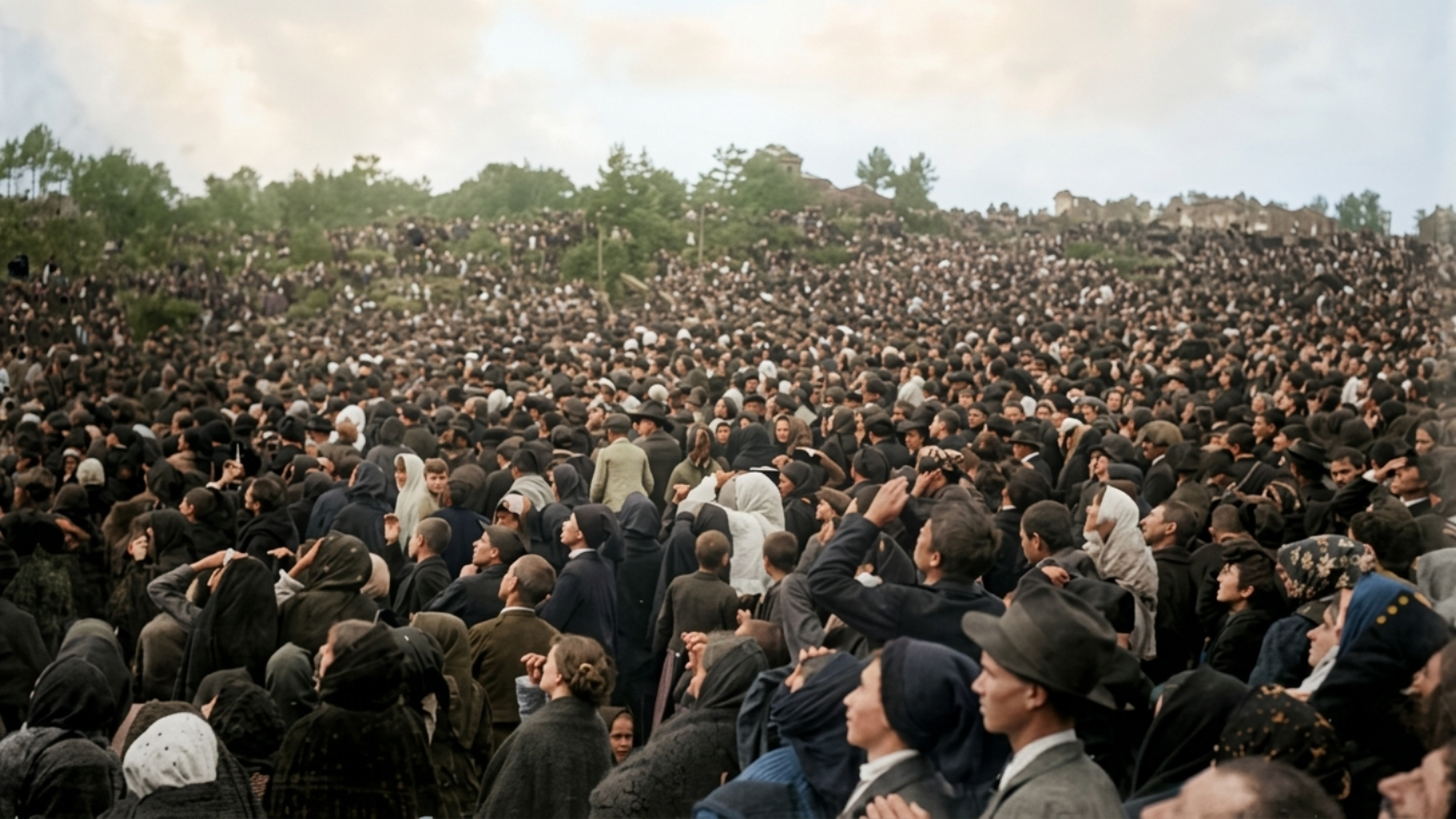
St Joseph remains one of the most astonishing figures in salvation history: the man chosen for the greatest earthly mission after Our Lady, and yet the most hidden; the guardian of the Redeemer, and yet the most silent; the protector of the Word made Flesh, and yet the one whose own words never appear in Scripture. His silence is not emptiness. It is revelation. Joseph’s entire life is a living “yes” to God, spoken not with the tongue but with the total obedience of his heart. When the angel appears in a dream, Joseph does not question. He rises. When the Child is threatened, he does not hesitate. He flees into the night. When the Holy Family returns to Nazareth, he does not seek honour. He works, day after day, shaping wood while the Creator of the universe grows under his roof. Here lies one of the most breathtaking mysteries of the Christian faith: Joseph commanded God . The eternal Son, in assuming true humanity, submitted Himself to Joseph’s fatherly authority. As St Bernard wrote, “He to whom angels submit Himself was subject to Joseph.” St John Paul II echoes this in Redemptoris Custos , noting that Joseph’s fatherhood is expressed “in the total gift of self, in his life of work,” and that Jesus “obeyed him” in the home of Nazareth. The Almighty allowed Himself to be led, taught, and protected by a silent carpenter. This hidden greatness was confirmed in a striking way at Fatima. During the final apparition on 13 October 1917, as the Miracle of the Sun unfolded, the children saw St Joseph appear in the sky with the Child Jesus. St Joseph blessed the world, tracing the Sign of the Cross with the Son in his arms. Heaven itself revealed Joseph’s continuing mission: to guard the Church as he once guarded Christ, and to bless the world with the same quiet authority entrusted to him in Nazareth. Fatima thus unveils Joseph not only as a figure of the past but as a father for our times; active, present, and powerful in his intercession. It is remarkable that the Church took centuries to fully recognise St Joseph’s splendour. His vocation was so interior, so free of selfโassertion, that even the early Church needed time to perceive the magnitude of the man who lived in the quiet shadows of Nazareth. Yet holiness cannot remain hidden forever. Slowly the Church began to see what Heaven had always known: that Joseph’s mission was unparalleled; that he loved Mary with a purity unmatched; that he protected Jesus with a courage beyond compare, that he lived the Beatitudes before they were ever preached.

The devotion is associated with a miraculous apparition in 1467 at Genazzano, Italy, where an image of Mary and the Child Jesus appeared in an ancient church. This shrine transformed into a site of pilgrimage, with numerous miracles later linked to Mary's intercession there. Catholics celebrating this feast seek Mary’s assistance in obtaining wise counsel, particularly when faced with challenging decisions, family issues, and spiritual matters. The title “Good Counsel” signifies Mary as a wellspring of wisdom and steadfast guidance.